The 2026 Shift: From Experimental Chatbots to Autonomous Digital Employees
October 2026 permanently erases the boundary between simple experimental chatbots and full-fledged digital employees. Recent platform releases and autonomous execution systems from market leaders, analyzed thoroughly in OpenAI Research on Operator Agents as well as global industry studies by Gartner Insights on the Autonomous AI Market, show a massive shift: B2B enterprises are rapidly transitioning to autonomous AI agents. The recreational and experimental phase of artificial intelligence is over, giving way to intense competition for operational efficiency, execution speed, and end-to-end workflow automation.
Unlike previous-generation bots that operated strictly on rigid decision trees and predefined response scripts, modern autonomous agents hold complex multi-step task contexts, connect seamlessly to enterprise knowledge bases, CRM, ERP, and external APIs, and execute sophisticated scenarios without constant human supervision. They process unstructured incoming data, make logical decisions under uncertainty, and trigger actual, binding transactions across corporate software infrastructure.
Integration Architecture: How an AI Agent Becomes Part of Enterprise IT Infrastructure
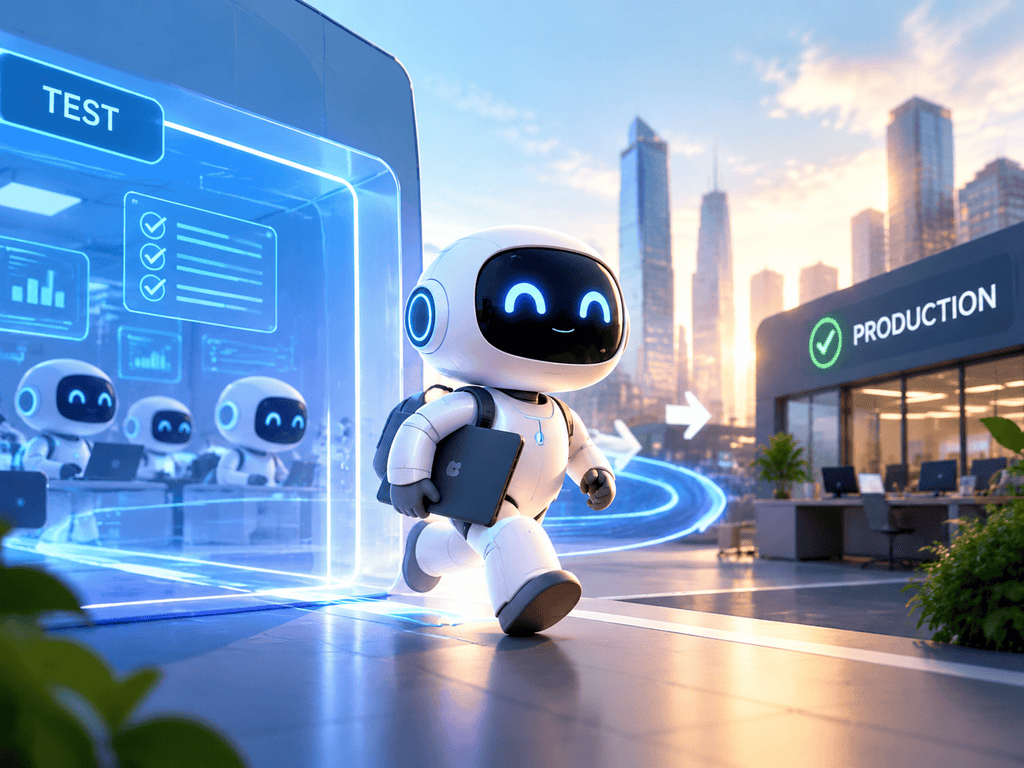
The primary engineering challenge when moving neural networks out of isolated test environments into real production is establishing reliable, secure, and resilient software bonds. To deliver measurable commercial ROI, an AI agent requires deep architectural integration with key enterprise software nodes:
- CRM and ERP System Connectivity (Salesforce, HubSpot, SAP): Automated retrieval of customer interaction history, updating deal pipeline stages, generating custom proposals, issuing invoices, and performing real-time lead qualification.
- Vector DB and RAG (Retrieval-Augmented Generation) Integration: Linking agents to vector databases for instant retrieval of internal corporate regulations, technical product specifications, and legal documentation with zero model hallucination.
- REST API and Webhook Orchestration: Autonomous booking management, event notification dispatching, order cancellation processing, and trigger-based activation of third-party SaaS microservices.
- State Management and Task Planning: The ability of an agent to break down a high-level business objective into granular sub-tasks, monitor step-by-step execution states, and self-correct when encountering intermediate runtime errors.
Executing such complex engineering pipelines demands proven backend expertise. If your organization requires enterprise-grade custom software development and AI integration, partner with specialized engineers who build scalable, fault-tolerant architectures.
What This Means for Business: ROI, Speed, and Human Resource Savings
Companies that embed AI automation directly into their process architecture gain a massive operational advantage in response velocity and resource utilization. Instead of requiring human account managers to manually parse primary inquiries, an AI agent engages incoming leads within 3 seconds, qualifies their needs, pulls relevant product data, and delivers a commercial offer 24 hours a day, 7 days a week.
Technology is no longer a vanity metric — it yields net profit and conserves human capital costs. However, remember that even the most sophisticated AI assistant cannot save a digital product suffering from poor usability or broken marketing logic. If your website attracts traffic without generating sales, read our guide on why your website looks great but conversion is zero to repair your sales funnel.
Data Security and a Holistic System Deployment Strategy
Deploying autonomous AI agents into production environments demands strict adherence to cybersecurity protocols, access control, and corporate data isolation. According to technical frameworks published in Cloudflare Enterprise Security , every neural network connection with corporate endpoints must be fortified with strict authentication, encryption, and real-time anomaly detection. Learn more about securing digital perimeters in our deep-dive analysis on corporate API security under attack.
For automation to deliver maximum financial return without software conflicts, web platform engineering, AI training, analytics integration, and digital marketing must be built within a single, unified technical perimeter. Evaluate the strategic advantages of an ecosystem approach over fragmented contractors for complex enterprise initiatives.

Frequently Asked Questions (FAQ)
How does an autonomous AI agent differ from a standard chatbot?
Standard chatbots rely on hardcoded, rule-based trees. Autonomous AI agents dynamically plan execution steps, query enterprise databases using RAG, call external API endpoints, and complete complex multi-step workflows without human intervention.
Which platforms can an AI agent integrate with?
AI agents integrate with major CRMs (Salesforce, HubSpot, Zoho), communication platforms (Slack, Telegram, WhatsApp), and internal databases via secure REST APIs and Webhooks.
Is corporate data safe when sent to an AI model?
Enterprise-grade implementations utilize private API endpoints with Zero Data Retention policies, end-to-end encryption, and role-based access controls to prevent data exposure.
How long does it take to deploy an AI agent to production?
Developing a single-purpose MVP AI agent takes 2 to 4 weeks. Full enterprise integration into complex software environments takes between 1.5 and 3 months.
How is ROI achieved in AI implementation?
ROI is driven by 24/7 instant lead qualification, eliminating manual data entry labor costs, reducing operational errors, and increasing conversion rates by 20-35%.
How can we order custom AI agent implementation?
Submit a request via our website or contact our technical team directly. We will audit your current workflows, design the solution architecture, and launch your system turnkey.