The sale is over, the traffic is gone, and the parcels start coming back. You pay for delivery both ways, for processing and for markdowns, so the profit from the promotion melts. In the EU you cannot simply forbid returns either, because the buyer has a right of withdrawal from an online purchase within 14 days. This guide shows how to cut ecommerce returns without hurting sales: how to count what one return costs, how to sort returns by reason, which tool closes which reason and what you may and may not change in your policy.
What ecommerce returns really cost: delivery, handling, markdown, time
A refund is only the visible part. BigCommerce’s guide to returns lists the hidden costs: transport, labour for inspection and restocking, markdowns on goods that cannot be resold as new, and the cost of fraud and lost customers. Count your own numbers before you change anything, because every fix has a price.
| Cost line | Where to find the number |
|---|---|
| Outbound and return shipping | Carrier invoices, minus what the customer paid |
| Handling and inspection | Minutes per return multiplied by the hourly cost of the team |
| Markdown or write-off | Price difference for items resold as opened or damaged |
| Support time | Tickets and emails about each return |
| Lost margin on the sale | Margin of the order minus all lines above |
Ecommerce return rates matter less than margin lost. Rank products by the margin they lose, not by the number of tickets, and start with the top five. To reduce losses, review the returns that follow each sale. Online store returns also tie up stock that could sell again.
Sort returns in ecommerce by reason: what data you need and where to get it
Add a short reason list to the returns form: wrong size, differs from photos, defect, damaged in delivery, late delivery, changed mind. Then review a sample of returns against chats and photos, because customers do not always name the real cause. Link each return to a product and variant, and you will see that a handful of items cause most of the loss. Many returns are preventable. The same BigCommerce guide names items that do not match the description, wrong size or fit and damage in transit as the most common reasons.
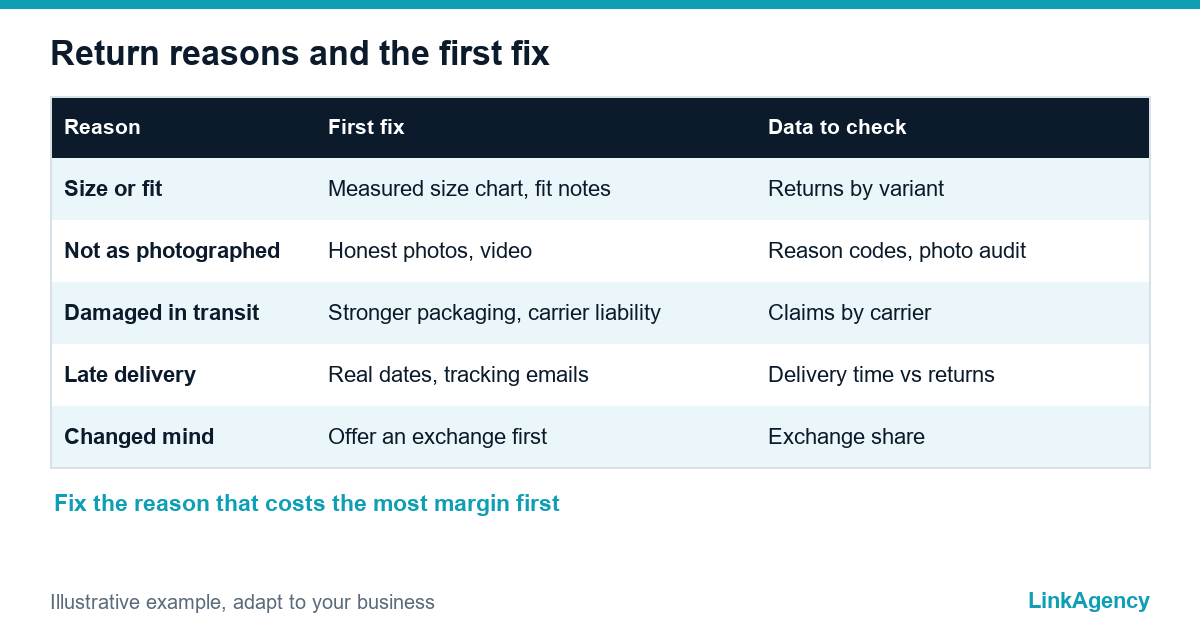
Reasons for product returns and the first fix for each
- Size or fit: a measured size chart for each model, plus fit notes from reviews.
- Does not match photos: honest photos in daylight, a video and the real colour.
- Damage in transit: stronger packaging and a carrier that answers for damage.
- Late delivery: realistic dates at checkout and tracking emails.
- Changed mind: a clear next step, such as an exchange, before a refund.
Fixing the top cause cuts product returns faster than a new policy.
Size and expectations: how the product page and photos reduce returns
The product page sells, and it also decides what the buyer expects when the box opens. Our product page checklist covers how to sell, and here the goal is different: make the page honest. List dimensions, materials and care, show the product from several sides and put reviews with photos close to the buy button. A bigger gap between page and parcel means more online store returns, and each extra detail closes part of it.

Email and service after the purchase: what to do before the customer files a return
Many ecommerce returns start with confusion rather than defects. Each sale can bring returns, so reduce the avoidable ones first. Send a shipping update, a delivery confirmation and, three or four days later, a short message with usage tips and a way to ask for help. A person who can fix a problem with a chat will not ask for a refund. Returns in ecommerce are easier to prevent when the message arrives before the problem. Put these messages on a schedule before the next sale peak. Our guide to the Black Friday checklist for ecommerce shows what else to prepare.
Exchange and store credit instead of a refund: when it works
When an exchange solves the problem, you keep the sale and the buyer gets the right size. Offer it first on the returns page, with one click and free delivery of the replacement if your margin allows. Store credit keeps revenue in the shop, but it must be optional, written down and compatible with the law. Free returns can lift conversion, yet they also raise costs, so test any change on one category before you roll it out. Watch for return abuse, such as wardrobing or bracketing, and add checks only where signals appear.
Return policy in the EU and the US: what you can limit and what you cannot
Under Directive 2011/83/EU, a consumer has 14 days to withdraw from a distance contract without giving a reason, counted for goods from the day the buyer receives them. The seller must refund within 14 days of learning of the decision, and the buyer pays the direct cost of returning the goods unless you agreed to pay or failed to inform them. The right of withdrawal does not cover every item. Some goods are excepted, such as made-to-order items and sealed hygiene products once opened. You may offer longer periods, but not shorter ones. In the United States there is no single rule for ordinary online purchases, so the store policy and state rules decide, and a clear policy becomes a selling point.
How to automate returns so they do not eat your team’s time
A returns portal lets the customer choose a reason, get a label and see the status without writing to support. It follows a simple order:
- The customer opens a request and picks a reason.
- Rules check the window and the item, then issue a label.
- The warehouse inspects the parcel and updates stock.
- The customer gets a refund, an exchange or a credit note.
- The reason goes back to the catalogue team.
Rules can approve low-risk returns instantly and send the rest to inspection. The portal also flags return abuse early. Our AI workflow automation connects the shop, the carrier and the CRM, and our ecommerce development services add the portal to your store.
Free review of your ecommerce returns
We look at your returns by reason and product, then show which fixes in the product pages, checkout and after-sales service pay back first, and what can be automated. You can also order a returns review as a separate piece of work.
- a ranking of return reasons by lost margin;
- a short plan: product page, messages and automation.
Leave a request and we reply within one business day.

Frequently Asked Questions (FAQ)
What is a normal return rate for an online store?
It differs by category and market, and published averages vary. Compare your own rate by product with your past months and the sector, and judge it by margin lost rather than by the share alone.
Can I stop accepting returns after a sale?
In the EU, no. Buyers can withdraw from a distance purchase within 14 days, except for excluded goods. You may offer a longer period or exchange, but not a shorter one.
Who pays for return shipping?
Under EU rules, the buyer pays the direct cost of returning goods unless you agreed to pay or did not tell them. Many shops choose free returns for key categories and test the effect on margin.
Does a paid return policy reduce returns?
It can lower returns, but it can also reduce conversion and repeat orders. Test it on one category and compare returns, sales and support tickets before you extend it.
What should a returns portal do?
It should collect the reason, issue a label, show the status and send updates. Rules can approve low-risk cases at once and flag risky ones for a check.
Can LinkAgency review our returns?
Yes. We rank your return reasons by lost margin and propose fixes in the product pages, the messages and the process. The first review is free.