You chose a vendor, signed the contract and the first invoice arrived. Many owners outsource software development in a hurry and then relax. Now comes the quiet stage where many projects go wrong: weeks pass, status messages sound confident, and you cannot tell whether the product is closer to launch or not. Outsourced software development does not require you to read code. It requires seven management habits that any owner can run with a calendar and a shared folder. This guide gives them in order, with a one-page weekly status template and six early red flags.
Outsourced software development: what the owner actually controls
You do not control how the code is written. Your outsourced team writes software, and development decisions still belong to you. You control four things: who can access the work, what counts as finished, how often you see a working result and how changes are priced. Everything below serves those four. If you are still choosing a partner, start with our 12 questions for choosing a software development company, then come back here.
Seven rules for managing outsourced development
Rules 1–3: access, criteria, demos
- Keep the keys. The code repository, task tracker, hosting, domain and cloud accounts should sit in accounts owned by your company, with the vendor invited as a user. Check the repository roles on GitHub so you know what each role can do.
- Write acceptance criteria before work starts. For each feature, list in plain words what a user can do when it is done. The Scrum Guide calls this a definition of done, and it is the cheapest protection against arguments later.
- Demand a live demo every one or two weeks. A working screen you can click beats a slide deck. If a demo is moved twice, treat that as news.
Rules 4–6: status, changes, your own testing
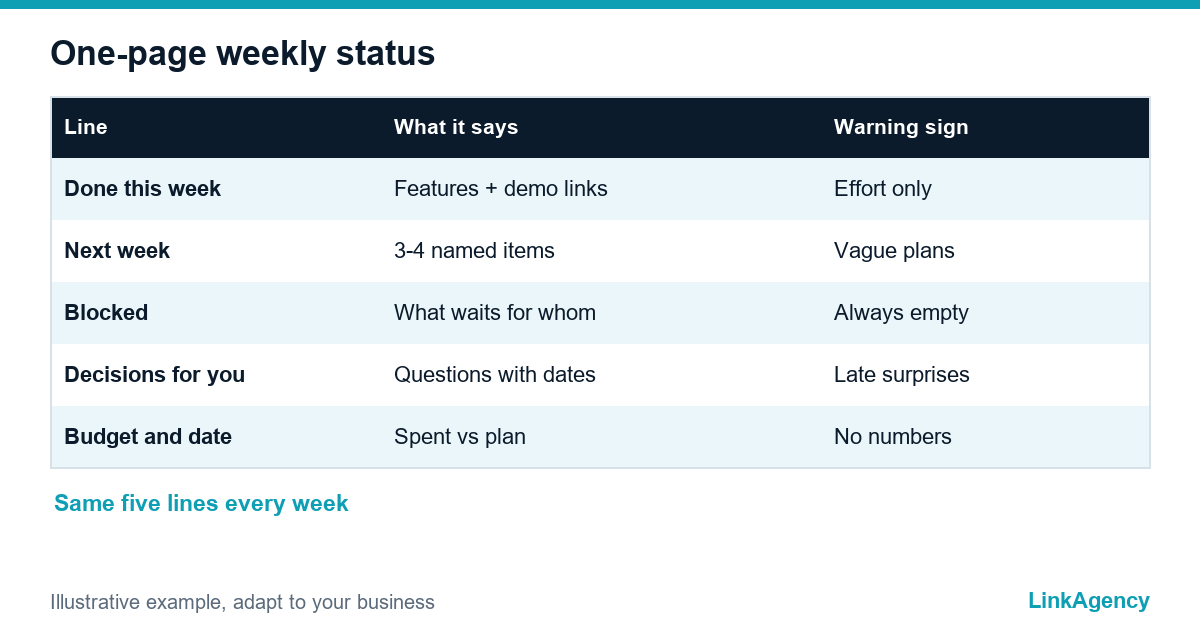
- Use a one-page weekly status with the same five lines every time. The table below shows them.
- Run every change through a written change estimate. A new idea gets a note of the time and cost, and nothing starts until you approve it.
- Test it yourself on a staging site. Ask for a test version and a short script of what to click, then report what you see.
| Status line | What it should say | Warning sign |
|---|---|---|
| Done this week | Features with links to the demo | Only effort, no results |
| Next week | Three or four named items | Vague plans |
| Blocked | What waits for whom | Always empty |
| Decisions for you | Questions with a deadline | Surprises at the end |
| Budget and date | Spent against plan | No numbers |
That page is the center of outsourced software development management. Pair it with one milestone per month, so you can see the date, not only the effort.

Rule 7: spot red flags in the first weeks
- Demos are postponed or replaced by slides.
- Status reports list activity but no links to working features.
- You do not have access to the repository or the task tracker.
- The same feature is “almost done” for several weeks.
- People on your project change without a word.
- Changes happen without an estimate, and the invoice surprises you.
One flag may be a bad week. Three flags in a month justify a direct conversation, and persistent ones justify an independent review of the project.
How the contract model changes your role
Software development outsourcing works best with a named owner on your side, even if that owner spends one hour a week on it.
With a fixed price, the main risk is a vague scope, so acceptance criteria matter most. With time and materials you pay for effort, so the weekly status and the change estimates keep the budget visible. We compared both in our guide to fixed price versus time and materials. For outsourced developers who work in sprints, the UK government’s agile delivery guidance is a readable reference on what regular reviews should look like.
What to do if the project drifts
Start with facts. Ask for the repository access list, the last three demos and the list of open decisions. Then agree a short recovery plan with dates. If the answers stay vague, order an independent project audit: a neutral engineer reviews the code, the environments and the plan, and tells you in plain words what is solid and what is risky. A fresh view often saves more than another month of waiting.
Order help with outsourced software development
Some owners prefer a technical partner on their side of the table. Our custom software development services include delivery management and reporting in plain language, and we also review projects run by other vendors. You can order an independent project audit as a short, separate task.
Free check of your outsourced software development project
We look at access, acceptance criteria, demos and change handling, then tell you which of the seven rules you are missing. If the picture is unclear, you can order an independent project audit as a separate piece of work.
- a short report with the gaps and red flags found;
- a one-page weekly status template for your project.
Leave a request and we reply within one business day.

Frequently Asked Questions (FAQ)
Can I manage a software vendor without technical skills?
Yes. You manage access, acceptance criteria, demos and change approvals, not code. Those four areas need clear questions and regular checks, and none of them needs programming knowledge.
How often should I see a working demo?
Every one or two weeks is a good rhythm. A short demo of real screens shows progress better than reports, and it gives you a chance to correct direction while changes are still cheap.
Who should own the code repository and the servers?
Your company. Create the accounts in your name and invite the vendor as a user. That way, a change of vendor does not leave your product in someone else’s hands.
What are acceptance criteria?
They are plain statements of what a user must be able to do for a feature to count as finished. Writing them before work starts prevents disputes about whether something is done.
What should a weekly status report include?
Five lines: what is done with links to the demo, what comes next, what is blocked, which decisions are needed from you with dates, and how spending compares to the plan.
When do I need an independent audit?
When red flags repeat: postponed demos, no repository access, work that is always almost done or changes without estimates. An audit by a neutral engineer gives a plain-language view of the risks.
How do I order a project check from LinkAgency?
Leave a request and describe the project and the vendor setup. We check the seven rules, report the gaps and send a quote for any follow-up work you choose.