Every autumn the plan for next year is assembled from wishes: a studio says you need a new site, an ad agency wants more budget, someone suggests “let’s do AI”. Money gets spread across channels with no link to revenue, and by June nobody can say what worked. A digital marketing plan for 2027 should start from sales, not from channels. This guide gives owners a planning order, a priority matrix and the rules and dates to build into the plan.
Why a channel-by-channel digital marketing plan fails, and what to start with instead
A plan written per channel answers “what will we post and advertise?” and skips “what limits our sales?”. Each channel owner then reports clicks, leads or reach in its own units, and nobody connects them to revenue. A working digital marketing plan runs in four moves: sales goals, the funnel as it really is, the narrowest point in that funnel, and only then the channels.

Step 1: sales goals and an honest picture of this year’s funnel
Write the target as a business number: qualified enquiries, orders or repeat purchases per quarter. The plan covers digital work, but marketing decisions start from sales. Then reconstruct the current year. Where did the last customers really come from, which share of enquiries was answered the same day, how many bought again? Use the CRM or even a spreadsheet of recent deals. If the data does not exist, building it is the first item of the plan, because every later decision depends on it.
Step 2: find the bottleneck: traffic, site, lead handling or repeat sales
- Traffic: few people reach you, but those who do convert.
- Site: plenty of visitors, low conversion, slow or confusing pages.
- Lead handling: enquiries arrive and wait, or get lost between tools.
- Repeat sales: customers buy once and never hear from you again.
Usually one of these four limits growth more than the others. Find it. Spending on a wider channel before fixing that point only makes the leak larger. Our performance marketing agency team starts every planning engagement with this diagnosis for exactly that reason.
Step 3: the priority matrix: impact, difficulty and time to payoff
Good digital marketing plans rank work before they schedule it. List every candidate item, from a faster product page to a new campaign, and score it on three questions: how much will it move revenue, how hard is it, and when will it start paying back. Then sort.
| Candidate | Impact on revenue | Difficulty | Time to payoff |
|---|---|---|---|
| Fix slow forms and broken tracking | High | Low | Weeks |
| Answer every enquiry within a set time | High | Low | Weeks |
| Search campaigns for ready-to-buy queries | Medium to high | Medium | Weeks to months |
| SEO content and technical clean-up | High | Medium | Months |
| Site rebuild | Depends on the bottleneck | High | Months |
Start with high impact and low difficulty, keep one slow, high-impact item running in parallel, and push the rest to later quarters.
Website, ads, SEO and AI: how they depend on each other in one plan
These are not four separate budgets, and the digital marketing channels you choose only work together when the site is ready. Ads send traffic to a site, so a weak page wastes the spend. SEO and ads read the same queries, so planning them together shows which phrases to pay for and which to earn. AI is useful where it saves your team’s time, such as drafting replies, tagging enquiries or preparing reports. Search itself is changing too, and Google’s guidance on AI features in Search explains how your pages can appear there. When one team plans all four, the order stays logical; our guide to a full-service digital agency versus multiple vendors shows the trade-offs.
Rules and risks to build into the 2027 plan
Treat regulation as part of your plan for digital marketing, with an owner, not as a surprise. The European Accessibility Act applies from 28 June 2025, and the EAA and ADA requirements for business websites explain which sites are affected. The text of the directive is public. Add consent for analytics and advertising cookies under GDPR, a data processing agreement for each vendor that sees customer data, and a named person who reviews both twice a year. Cheap to plan. Costly to retrofit.
How to control the plan by quarter: reporting and review points
An annual marketing plan with monthly detail does not survive contact with reality. Fix the yearly goals, then plan each quarter in detail and review the numbers at the end of every quarter.
The four numbers to review every quarter
- Qualified enquiries.
- Cost per enquiry.
- Share of enquiries that became customers.
- Revenue from repeat buyers.
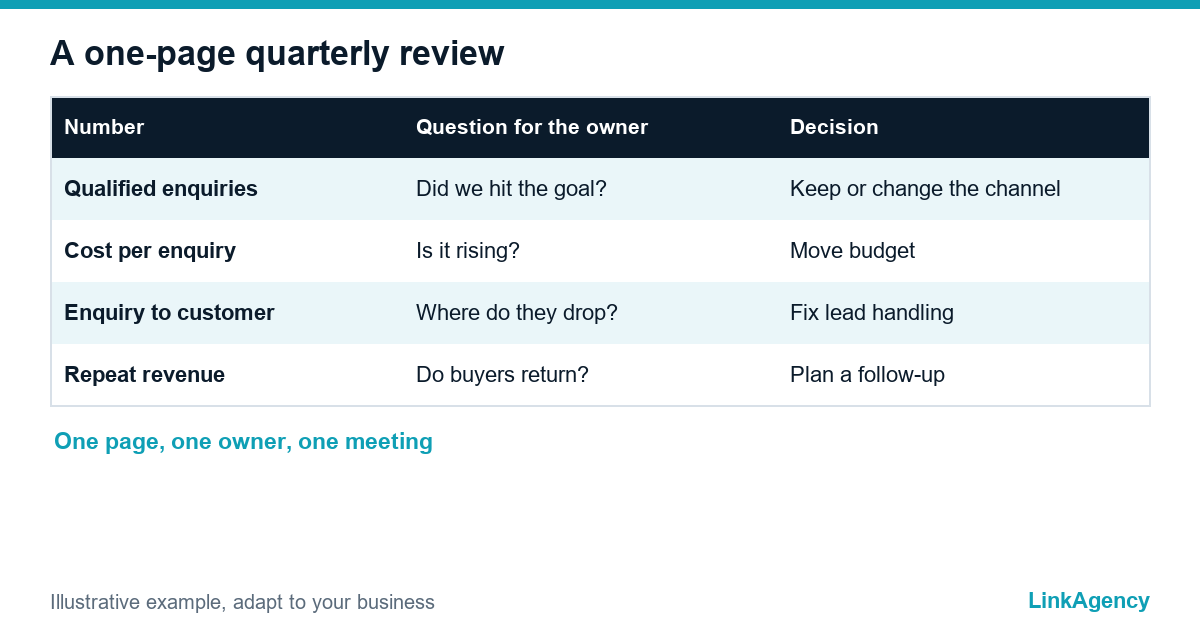
Compare them with the goal, move budget from what does not move the number, and write the decision down. One page, one owner, one meeting. A digital plan for 2027 that fits on one page gets read. Plan the digital quarter first, and marketing spend follows the plan.
Free audit of your current digital funnel before you plan
Send us your site and your channel list. We will look at the website, ads, SEO and lead handling together and show where the bottleneck is and what is the sensible first item of your digital marketing plan. If you decide to order a digital strategy review, we agree scope and owners first.
- a funnel map with the narrowest point marked;
- a scored priority list for the next two quarters.
Leave a request and we reply within one business day.

Frequently Asked Questions (FAQ)
Where should a marketing plan for next year start?
With sales goals and an honest view of the current funnel, not with channels. Find where customers really came from, where enquiries stall and what limits growth, then pick channels for that point.
How many channels should a small business plan?
Two or three that you can run consistently are better than six run badly. Choose them after the bottleneck is clear, and add another only when the first ones perform and the team has capacity.
How do I decide between a new website, more ads and SEO?
Score each option on impact on revenue, difficulty and time to payoff, and check the bottleneck first. A weak site makes ads wasteful, while a strong site with no traffic needs SEO or ads.
Is a yearly marketing plan too long to stay accurate?
A detailed twelve-month plan rarely survives. Fix yearly goals and plan each quarter in detail, with a review at the end of every quarter to move budget towards what works.
What regulatory dates belong in the 2027 plan?
The European Accessibility Act has applied since 28 June 2025 for covered services, and GDPR consent rules apply to analytics and advertising cookies. Give each topic an owner and a review twice a year.
Where does AI belong in a digital marketing plan?
Where it saves your team time on defined tasks, such as drafting replies, tagging enquiries or preparing reports. Check the output, and do not let it replace the decision about priorities.
Can LinkAgency audit our funnel before we plan?
Yes. We review the website, ads, SEO and lead handling together, mark the narrowest point and give you a scored list of what to do first. You get the written findings before any work is agreed.