
The site is “ready”, the launch email went out, and then nothing. No traffic, no enquiries, no idea what to do on Monday. Usually the cause is not the site. Developers, SEO and ads each did their job, but nobody put the jobs on one calendar. This guide gives a founder or marketing director one plan in three stages, a shared task map for every team and the few metrics that matter.
Website launch plan: why launching without one brings no customers
A launch is not a date but a chain: build, be found, convince, measure. Break any link. The rest is wasted. Gaps are predictable, and most website launch plans ignore them. The developer ships a fast site that blocks search engines. Ad managers send traffic to a page the analytics cannot see. The SEO specialist writes content for pages that were renamed last week. A single website launch plan removes the handovers where this happens. Plan the website before launch, not after it. Our web development services are planned around the same chain.

Thirty days before launch: goals, analytics, structure, technical minimum
A plan for a website launch starts with one goal. Write it as a business number, such as qualified enquiries per month, not visits. Set up analytics and events before the first visitor arrives, otherwise the first weeks of data are lost. Fix the site structure and URLs now, because changing them after launch costs rankings. If the brand changes with the site, first decide whether you need a rebrand or a refresh, record the result in a brand style guide. Then run a technical SEO minimum, because technical SEO protects the first month: titles, headings, a sitemap, and a check that staging settings are gone. Google explains how noindex blocks search indexing, and a forgotten noindex tag is the classic launch accident.
| Stage | Development | SEO | Ads | AI |
|---|---|---|---|---|
| Before launch | Staging, speed, forms | Structure, redirects, titles | Audiences, landing pages | Lead intake rules |
| Launch day | Go live, monitor | Indexing check, sitemap | Tracking test | Auto-replies tested |
| Days 1–30 | Fix bugs fast | Watch coverage | Test offers | Sort enquiries |
| Days 30–90 | Speed and UX | Content, links | Scale winners | Weekly report |
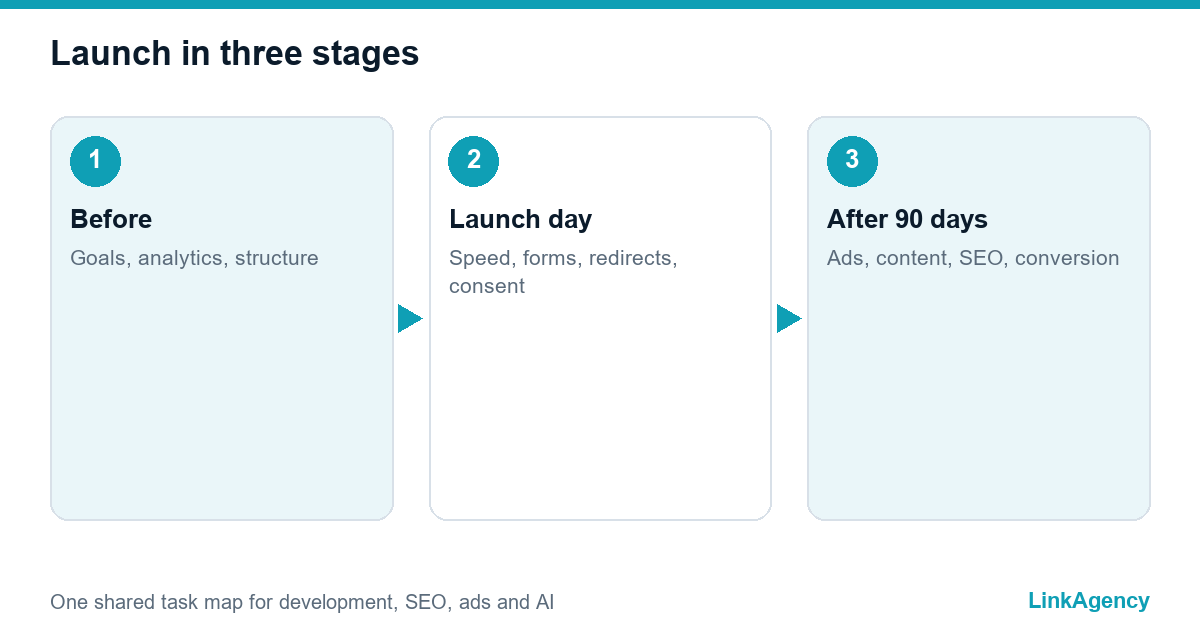
Launch day: the website launch checklist before you press publish
Treat the day as a short checklist, not a celebration. EU cookie rules also apply: Article 5(3) of the ePrivacy Directive covers storing or reading information on a visitor’s device, so check what your market requires for consent, and put accessibility on the same list, as our guide to website accessibility requirements explains.
- Speed on a real phone, not only on a desktop.
- Every form delivers a message to a person who reads it.
- Old addresses redirect to new ones.
- Pages are indexable and the sitemap is submitted.
- Cookie consent works, and analytics respects the cookie consent choice.
Why keep a rollback copy
If a fix breaks something, you return in minutes.
What goes in it
Files, database and settings, with the date.
The first 30 days: ads for quick data and honest feedback
Search takes time, so use paid traffic to learn faster, since a small budget on a few offers shows which message converts, which pages leak visitors and which audience is wrong. A performance marketing agency can set this up alongside the launch. A go-to-market plan for a small business should fit on one page. Read the numbers weekly, speak to the first customers, and fix what they stumble over. This is also how to promote a new website without guessing.
Days 30 to 90: the new website marketing plan, content, SEO and conversion
Now invest in what compounds. A good website launch plan keeps ads and SEO in step, so keep the order. Launch the plan, not only the website. Publish pages that answer buyer questions, fix the pages that attract visitors but not enquiries, and build links slowly and honestly. Good SEO services work from the ad data, because paid queries show which phrases bring buyers. Improve conversion with small tests: a clearer headline, a shorter form, a visible phone number.
Where to add AI: leads, standard answers, reporting
Run an AI readiness checklist first, then add AI where it removes waiting. Never add it where it makes promises on your behalf, such as prices or delivery dates. Sort incoming enquiries, draft replies to common questions for a person to approve, and compile the weekly report. We described the safe order of such work in our guide to business process automation. Keep a human in charge of anything involving prices or contracts.

Metrics to show the executive
Use a website launch plan for a business that reports results, not activity, and keep the launch plan for your business short enough to read. Skip “traffic” as the headline. Show the numbers a director can act on, such as KPI trends against the goal set before launch.
- Qualified enquiries and the share that becomes sales.
- Cost per enquiry by channel.
- Share of enquiries from organic search, month by month, as in the six SEO success metrics.
- Conversion rate of the three main landing pages.
- Time to first reply.
Website launch plan: a free draft for your project
We will draft a launch plan for your project and show where gaps between teams usually appear. A website development company that also runs SEO and ads can then carry the new website marketing plan through the first 90 days, and a go-to-market plan for a small business needs exactly that.
- A three-stage plan with owners and dates.
The consultation is free, and we reply within one working day.

Frequently Asked Questions (FAQ)
How long before launch should planning start?
About a month before, so that goals, analytics, structure and the technical minimum are settled while changes are still cheap. Start earlier if the site replaces an existing one.
Should I run ads right after launch?
Usually yes, on a small budget. Paid traffic gives fast data on which message and page convert, while SEO needs weeks to show results.
What is the most common launch mistake?
A forgotten noindex tag or a missing redirect map, followed by analytics that do not record conversions. A launch-day checklist catches all three.
Which metrics should a director look at?
Qualified enquiries, cost per enquiry, share of enquiries from organic search, conversion rate of the main landing pages and time to first reply.
Where does AI help after launch?
Sorting incoming enquiries, drafting replies to common questions for a person to approve and compiling weekly reports. Keep a human in charge of prices and contracts.
How do I ask LinkAgency for a launch plan?
Describe your project in the contact form on this page. We will draft a three-stage plan and point out where gaps between teams usually appear, within one working day.